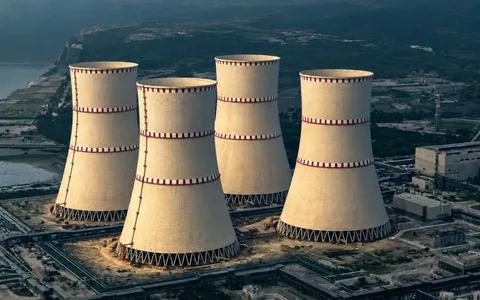

Matarbari Coal Plant Site Eyed for 70MW Solar Project
Bangladesh proposes a 70MW solar plant on 171 acres at Matarbari; Tk604.98 crore project awaits Planning Commission review over costs and financing.

At a glance
- Coal Power Generation Company Bangladesh Ltd (CPGCBL) has sent the project proposal to the Planning Commission. A Project Evaluation Committee meeting is expected soon.
- The plant is planned for land previously reserved for ash disposal. Using it avoids fresh land acquisition. An existing embankment also removes the need for a separate protective barrier.
- The estimated cost is Tk604.98 crore: Tk532.39 crore in project financing, Tk42.87 crore from the government and Tk29.71 crore from CPGCBL.
- The draft plan targets completion by December 2028. It includes solar panels, a one-kilometre transmission line and upgrades linking Matarbari and Chakaria substations.
- The Planning Commission has asked for comparisons of equipment prices, prior Finance Division approval of the financing structure, a higher CPGCBL contribution and details justifying some equipment and vehicle costs.
Context
A feasibility study completed in February 2026 recommended expanding the proposed project from 50MW to 70MW. The European Investment Bank is expected to support it through its Bangladesh Renewable Energy Facility, which includes €350 million in loans and €45 million in grant assistance. The project has been placed on the list of new, yet-to-be-approved projects in the FY2026–27 Annual Development Programme to facilitate foreign financing.
The proposal aligns with Bangladesh’s Renewable Energy Policy 2025, which sets targets for renewables to supply 20% of electricity demand by 2030 and 30% by 2040. The Planning Commission’s assessment puts current renewable capacity at 1,934.54MW, or 5.91% of the country’s 32,688MW installed capacity.
Why It Matters
The proposal offers Bangladesh a way to add solar generation without acquiring fresh land or building a separate protective embankment. Using existing space and infrastructure within a power complex may reduce some development costs, although transmission upgrades are still necessary to deliver electricity to the grid.
Moreover, with Tk532.39 crore proposed in project financing, equipment prices, financing terms and the plant’s expected output may help determine whether it delivers value. The Planning Commission’s questions are therefore central to assessing the proposal, not just procedural steps before approval. Adding solar at Matarbari may also diversify generation at the site and not replace its coal-fired units.
What We Think
Putting unused land to productive use is a sensible starting point, particularly when it avoids additional acquisition costs. However, renewable-energy projects require the same close review as any other public investment.
Additionally, the priority is value. Competitively priced equipment, suitable financing and a reliable estimate of electricity output and cost. Answers to the Planning Commission’s questions before approval give Bangladesh a stronger basis for deciding whether this project, and similar proposals at other power sites, are worth pursuing.