
Slow Journalism in an Age of Speed
Students and faculty at the 'No Viral, No Speed' festival champion slow journalism as resistance to clickbait and AI-driven instant metrics.
We are living in an era dominated by clickbait culture where slow journalism is unfairly treated as a negative word. The relentless pressure to turn news around instantly pushes deep reporting to the margins. Mainstream media often functions like a corporate PR agency that leaves little room to question authority. Algorithms are specifically designed to reward quick reactions, constantly pushing us to feel amazed or outraged. Amid this frantic landscape, however, a powerful counter-movement is taking place.
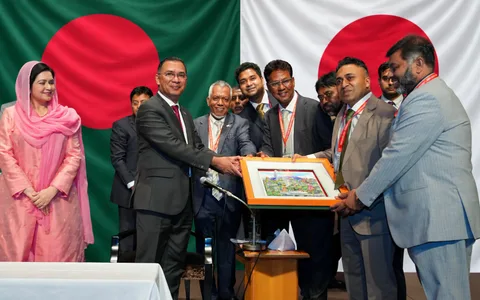
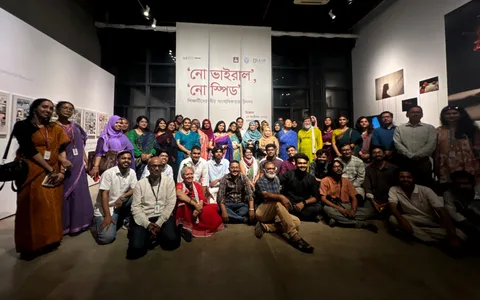
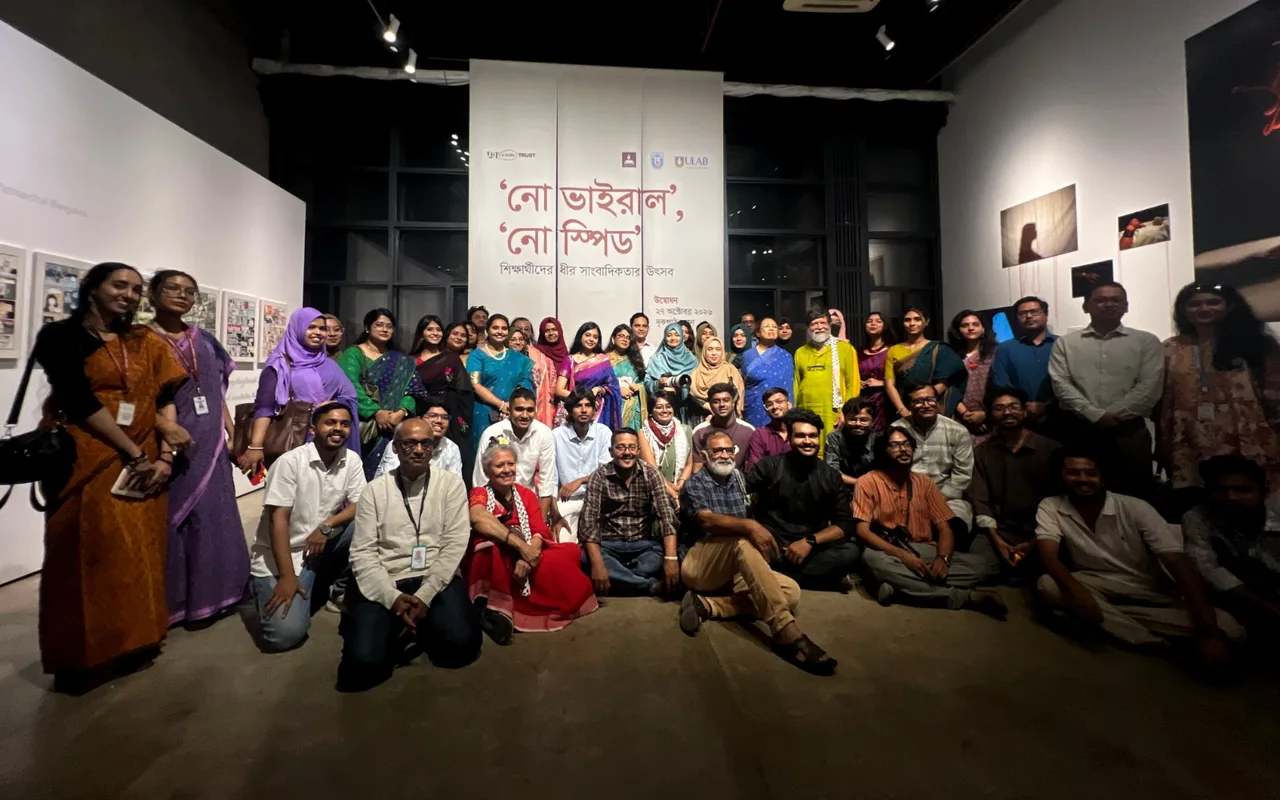
This tension took center stage at the 'No Viral', 'No Speed' Student Festival on Slow Journalism.
The exhibition united students and faculty from Central Women's University, Khulna University, and the University of Liberal Arts Bangladesh (ULAB) to rethink contemporary media. Curated by ASM Rezaur Rahman, the festival serves as a critical intervention against an industry that penalizes those who refuse to rush.
"In the era of clickbait, slow journalism is often regarded as a negative word which is not true," Rezaur Rahman remarks. He reflects on how fast-paced performance metrics have eroded traditional research and immersive storytelling. "The industry itself is gathered in such a way that if you don't match that speed, then you are proved as ineligible as a journalist. Because of that, in-depth practices in journalism are very much lost."
As a visual journalist, I see this university collaboration as a vital antidote. Misinformation and low digital literacy constantly trap audiences in fast, superficial reactions. Slow journalism rejects this trap through mediums like photography and audiovisual storytelling that can never be clickbait. These works demand real research and deep processes that allow young minds to step outside their comfort zones.
This spirit can be observed in the work of one of the participants, Israt Jahan Happy. Her documentary project, 'In the Middle', explores systemic healthcare struggles through a personal lens. "It's not personal; this is actually everyone's story," Happy reflects. "When I started this project, I felt this is quite different from our mainstream journalism. We had to go deep and think about it. You cannot always work by staying in your comfort zone."
Addressing the digital landscape, Prof. Dr. Din M. Sumon Rahman, Head of the Department of Media Studies and Journalism at ULAB, highlights the hidden perils of AI-driven media. "In an attention economy driven by AI summaries and instant metrics, audiences no longer click through to original reporting, a dangerous shift for the future of journalism," Professor Sumon notes. "Slow journalism is not just about pacing; it is a vital resistance against information monopolization and the daily chase for virality. It is how independent journalism survives."
With opening remarks from Dr. Shahidul Alam, Founder of Drik, the student festival set a tone of uncompromising resistance. By empowering emerging storytellers to question mainstream formulas, 'No Viral', 'No Speed' builds a lasting impact. Most importantly, It teaches students that patience and rigorous inquiry are the only paths forward for the future of journalism.