
Bangladesh Still Can't Police Its Police, says UN Rights Chief
UN rights chief Volker Türk warns Bangladesh still lacks independent oversight of security forces despite new NHRC and enforced-disappearance laws.

At a glance
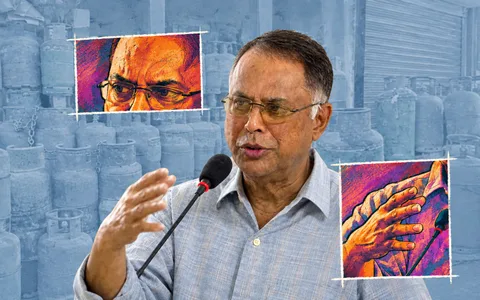
- UN High Commissioner for Human Rights Volker Türk told the Human Rights Council in Geneva on September 7 that Bangladesh needs "a strong and independent national institution" to oversee its law enforcement agencies.
- His comments build on a February 2025 OHCHR fact-finding report into the July–August 2024 uprising, which issued 44 recommendations, including an empowered National Human Rights Commission (NHRC) and independent civilian oversight.
- Parliament passed the NHRC Bill, 2026 and the Enforced Disappearance Prevention and Redress Bill, 2026, on September 6, just a day before Türk spoke, amid an opposition walkout.
- Rights groups say both new laws let security forces effectively investigate themselves: the NHRC must ask a "disciplined force" for its own report before probing a complaint against it, and enforced disappearance cases stay with police-led investigators rather than the NHRC.
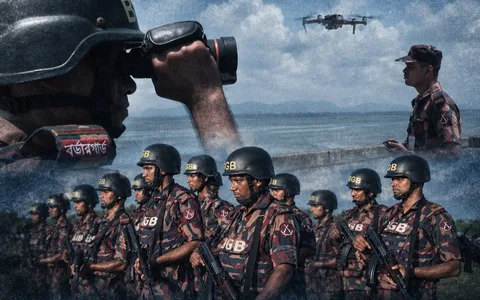
- The gap echoes the 2021 ‘US Magnitsky sanctions’ on the RAB, imposed over hundreds of alleged extrajudicial killings and disappearances under the Awami League government, which punished individuals abroad but never fixed the missing domestic watchdog.
Context
In December 2021, the US sanctioned RAB and seven officials over extrajudicial killings and enforced disappearances under Sheikh Hasina's government. Abuses fell afterwards, but Hasina's government promoted the accused officers instead of prosecuting them. After the 2024 uprising toppled that government, the UN documented serious violations and recommended the establishment of independent oversight bodies. Parliament has now passed new NHRC and enforced disappearance laws, but critics say both preserve the same self-policing loophole that let earlier abuses go unpunished.
Why It Matters
This moment exposes a pattern that has repeated for over a decade: foreign sanctions punish individual officers, but Bangladesh's own institutions still cannot independently investigate its security forces.
The 2024 uprising was meant to be the turning point, prompting the UN's 44 recommendations for institutional reform. Yet the newly passed NHRC and enforced disappearance laws keep investigative power largely with the police and give security forces a first say before any probe against them proceeds. This matters strategically because Western governments, including the US, calibrate sanctions and diplomatic pressure based on whether reforms are genuine or cosmetic.
If Bangladesh's own laws still shield law enforcement from independent scrutiny, it signals to international partners that structural impunity persists regardless of who holds power, keeping Dhaka exposed to future sanctions, human rights censure, and diminished credibility on its post-uprising reform narrative.
What We Think
In 2025, the National Human Rights Commission Ordinance gave the NHRC real power to investigate on its own, but the NHRC Bill, 2026, has now rolled that power back.
Can a law that lets the accused help control their own investigation really be called reform? - This question still remains in the shadows. History shows that this exact gap is what allows abuses to continue for years until other countries step in with sanctions. Bangladesh's promise of change now depends on whether this pattern repeats.